Odissi dance
A rigorous classical practice shaped by lineage, sculpture, rhythm, expressive storytelling, and years of patient refinement.
Operating in Sydney and the Blue Mountains
Learn Indian classical dance, music, culture, and spirituality as a living practice — for daily life, performance, and teaching others. Guided by Guru Nirmal Jena's depth of training, experience, and devotion, you will be supported from your very first steps through to deeply internalising these sacred arts. His teaching offers not only artistic mastery, but a path toward self-realisation, healing, and inner transformation.
A living tradition, taught with rigour, generosity, and devotion.
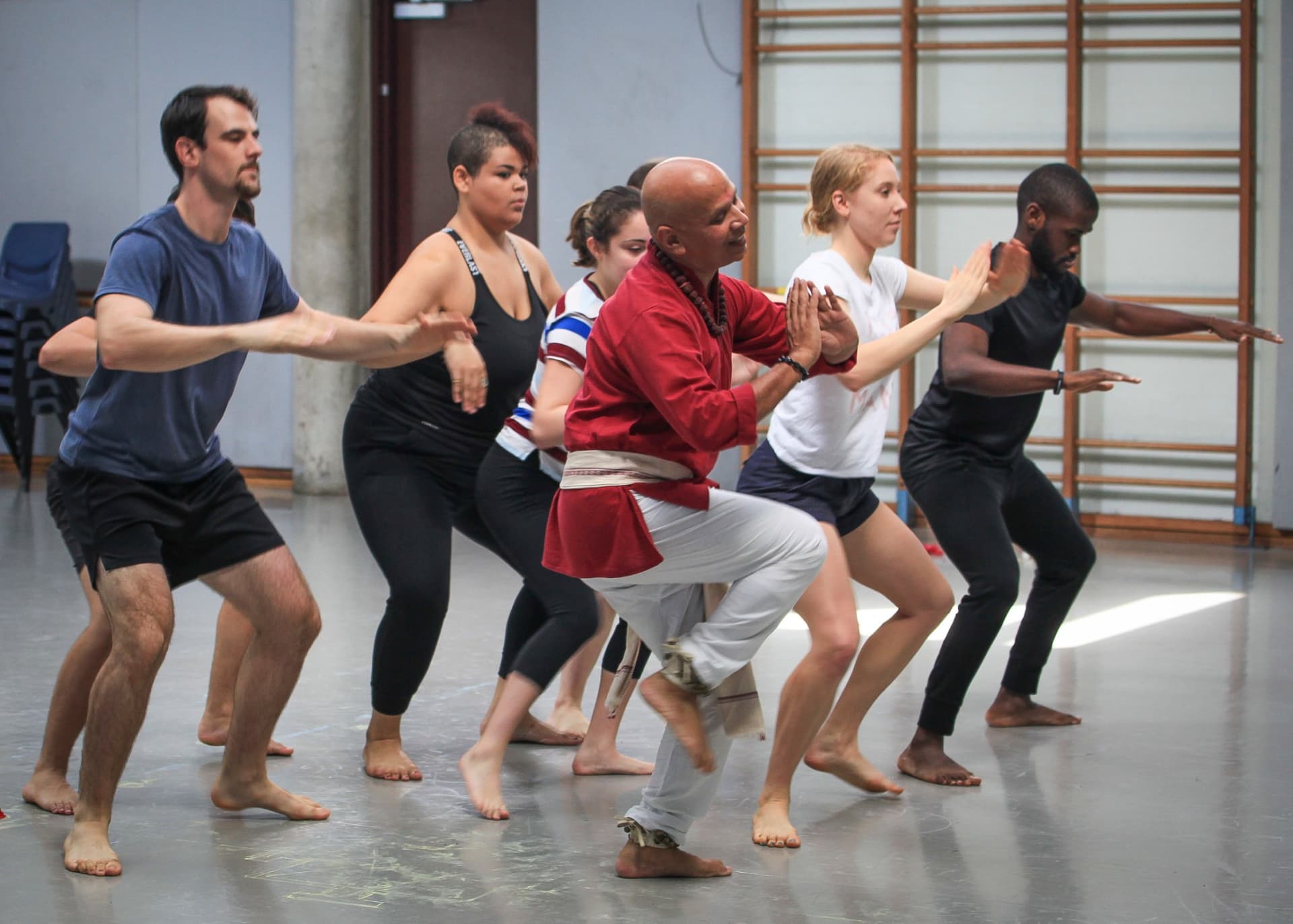
Nirmal teaches the Jena style of Odissi — his father's distinct family lineage — at studios in eastern Sydney and the Blue Mountains, and to the actors at the National Institute of Dramatic Art. Students arrive as beginners, as serious performers, and as people seeking the practice itself.
The practice
A rigorous classical practice shaped by lineage, sculpture, rhythm, expressive storytelling, and years of patient refinement.
Voice training for students who want to deepen musicality, breath, listening, and the relationship between sound and devotion.
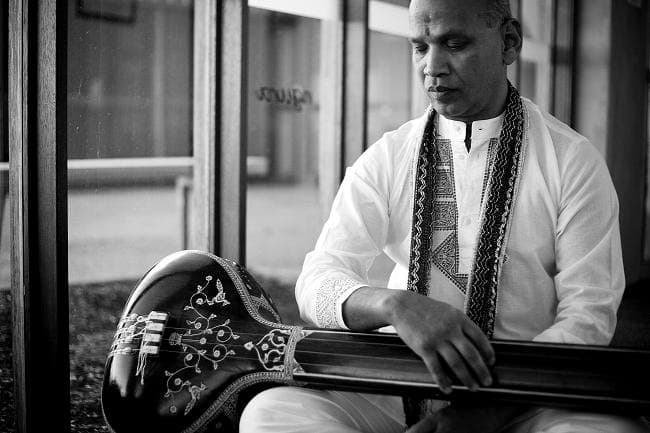
Percussion (pakhawaj), harmonium, and tanpura — classical foundations taught with attention to tradition, discipline, and the living connection between music and movement.
Origins
Odissi belongs to Odisha (Orissa), on the eastern coast of India. For centuries it lived inside temple worship, until colonial policy under the British Raj suppressed the temple-dance traditions that sustained it, and the form was very nearly lost.
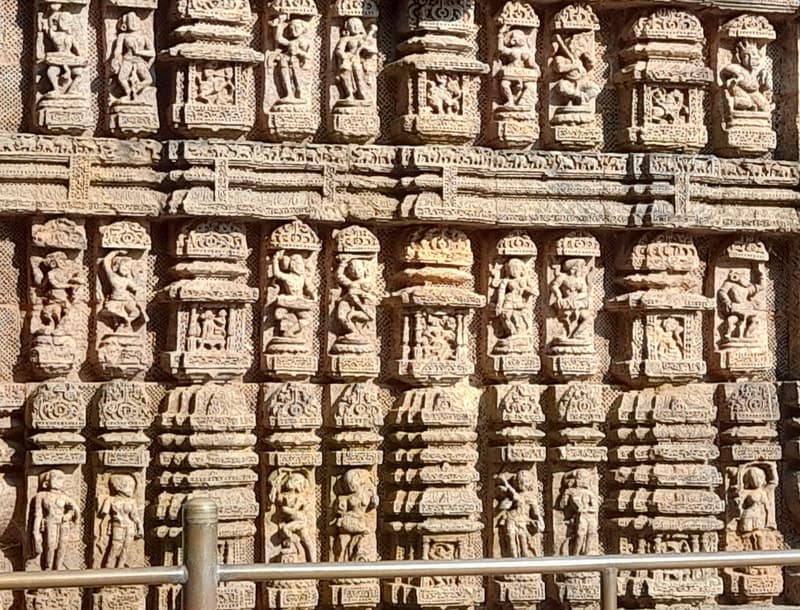
Nirmal's father, Guru Surendra Nath Jena, recovered it from the stone itself. In 1967 he travelled to the Sun Temple at Konark and studied the sculptural panels of its nata mandapa — the dance hall — reading each carved pose as a unit of movement and turning the iconography of the walls back into living dance. The Jena style of Odissi grew out of that act of reconstruction.
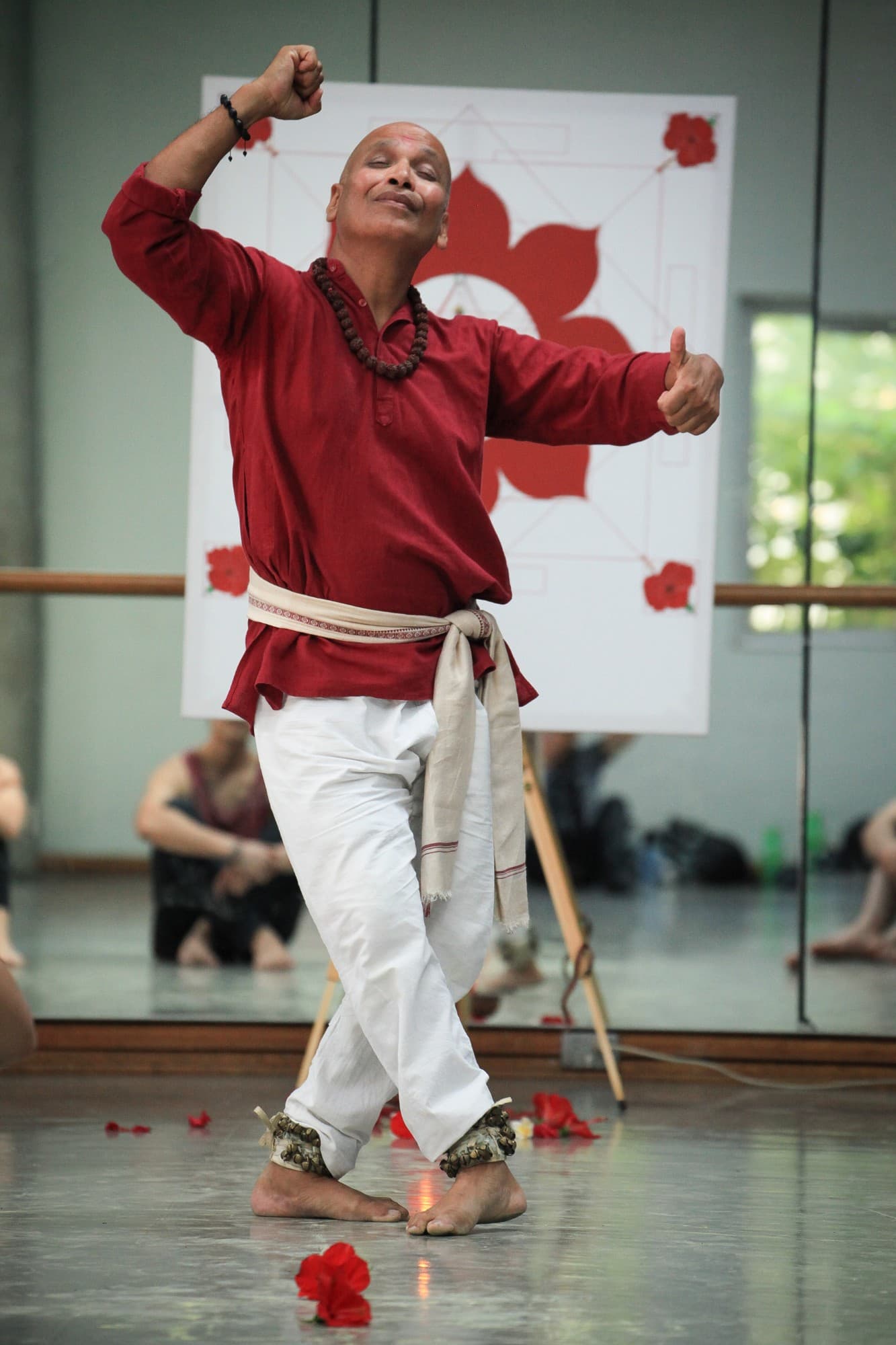
The style is recognised for the depth of its basic positions, the undulating shape of its movement, and a solo-performance focus that explores the raudra and bibatsasentiments where many Odissi traditions do not. Nirmal carries the lineage forward as his father's son and student, and through his own translations of his father's writing.
“Nirmal Jena's performance of Odissi dance was one of those rare delights when a solo performer gives so generously. This was painting, sculpture -- a whole culture -- coming to life.”
Classes and rates
Philosophy of teaching
The teaching offered by Guru Nirmal Jena is rooted in the understanding that Indian classical arts are not separate from life, but pathways into deeper awareness, presence, discipline, beauty, and inner transformation. Dance, music, rhythm, breath, meditation, storytelling, and philosophy are approached as interconnected practices that cultivate both artistic excellence and self-understanding.
Students are guided not only in technique and performance, but in developing a living relationship with the arts — one that can be carried into daily life with sensitivity, integrity, and devotion. Learning unfolds through attentive mentorship, embodied practice, reflection, humour, and human connection, honouring the traditional spirit of guru–shishya parampara while meeting each student where they are.
Classes are shaped with deep listening and responsiveness to the individual. Rather than a rigid or purely instructional approach, teaching evolves through the needs, readiness, and unfolding journey of each student. For some, this may begin with foundational movement or musical training; for others, it becomes a process of refinement, healing, contemplation, and reconnecting with a deeper sense of self.
Arts & Life Education Gurukul Ltd
Founded by Nirmal Jena and Chitrita Mukerjee, the Arts & Life Education Gurukul is an Australian registered charity with DGR status. Its program supports young people experiencing financial hardship through Odissi dance, music, and life skills — over years, not weeks.
Creativity, diversity, humanity, and sustainability are the values Nirmal and Chitrita work toward, in the school and through ALEG.
Sydney and the Blue Mountains
Tell us a little about what brings you here. Nirmal and Chitrita will reply personally.
We acknowledge the Bidjigal, Gadigal, Dharug and Gundungurra peoples of the First Nations as the Traditional Custodians of the lands on which we teach, and pay our respects to Elders past and present.
To book classes, call Chitrita Mukerjee on 0422 000 691, or fill out the form below.
In their words
“As someone with a deep appreciation for Indian culture and philosophy, it has been such a gift to learn under Nirmal Ji. Having taken Hindustani classical vocal classes before, I have never experienced the depth of understanding Nirmal brings to his classes. There is the beauty of the art form, the ragas and learning harmonium and tanpura/swaramandal, but more so, the philosophy and the depth of this practice is shared. The longing to meet with the Divine through breath, sound, voice, meditation, body and soul has truly been such a gift. It’s more than a ‘music lesson’ — it’s a time to make space for contemplating the deeper things of life.”
“We live in an extremely fragmented world, where we cannot understand things in totality. The kaleidoscopic nature of Guruji’s dance — where life talks to art, the sublime to the everyday, the arts mirror each other whether painting, architecture, literature, music or dance — is a balm for our modern souls. More than anything else, it creates this beautiful totality with a lightness of being, with humour and humanity. It is a precious universe.”
“The connection he formed with each student transcended words; it was an intuitive energy exchange. Sessions were never pre-planned. They were shaped by what your soul needed that day — whether a specific meditation or a new dance step. I always left with exactly what was needed — nothing more, nothing less.”
“Over time, layers began to peel away. Old patterns, beliefs, and emotional baggage gave way to clarity and space. As I reconnected to my true self, my relationships changed too. People on different wavelengths fell away, while others aligned more deeply. Guruji’s unconditional love, his ability to understand you beyond words, was a guiding light. His presence helped untangle emotional knots that had built up over a lifetime.”
“Nirmal shares an unwavering presence and engagement in his approach to teaching, and connection with his students. The time shared and the space created for exploration of self is truly unique.”